
Inspiration is key in our lives. It breathes fresh air into the stale problems that might hound us. Using inspiration is a excellent way to take action and make positive changes in your life. This video discusses the three components you need to get inspiration on the right path.
Author Archives: eralewis
Overcoming Internal Job Hunting Hurdles

A Woman’s Guide: Cultivating Everyday Personal Magnificence.
How to take Positive and Deliberate Action using A Woman’s Guide: Cultivating Everyday Personal Magnificence
A podcast series on taking action.
Overcoming Internal Job Hunting Hurdles
When Living at Home (Forever) Is Not Your Destiny
Era Lewis
Greetings. My name is Era and I am the author of A Woman’s Guide: Cultivating Everyday Personal Magnificence.
Firstly, an important note: If you are suffering from mental health problems which affect your ability to enjoy life, or you have suicidal thoughts, then it is imperative you seek professional help, now. Seeking mental health is a sign of true strength. This discussion isn’t a substitute for those times when you need in-person counseling.
Today we will talk about how to use emotions, a source of free energy, to change your life in positive directions. These ideas are more completely discussed in the A Woman’s Guide: Cultivating Everyday Personal Magnificence. Remember, emotions are to be used as personal and positive tools. Emotions can help you to get going when you are stalled out. Emotions should not be a huge or an ongoing display to get others to take on your responsibilities. Emotions can be used internally to overcome fear, doubt, lack of confidence and other such emotions holding us back from positive action in life.
This topic, job hunting, is one that is close to my heart. I have spent considerable time during my life looking for jobs and I know how hard it can be. I once left my resumé for a person at a business and the receptionist at the front desk had me talk to the intended recipient of my resumé on the phone. He asked me where I got my degree and I told him, UC San Diego. He spent the next few minutes yelling at me about all the people from California coming to Washington, and how terrible Californians were. Finally, he proceeded to tell me to go home and slammed down the phone. Well, I wasn’t born in California, and I didn’t grow up there, so many of his ridiculous accusations were completely false, not that it really mattered. I went home discouraged and cried. I was very dejected and unhappy. But then something within me changed, and for the better. We will come back to this idea.
Let’s begin by looking at the situation you might be in. You are a healthy adult but stuck at home with your parents. The list of reasons for being at home might be long. Here are the main factors:
First: You have limited financial resources compared to expenses incurred if living on your own.
Second: Related to the first item, you don’t have a job and aren’t really looking for one. There are reasons you aren’t looking for a job, but mainly, you just can’t muster up the energy for it.
You are unhappy and possibly despondent about your situation. You feel stuck. Then something worse happens.
I am going to use a term here that you may not like, but I think it is important to address it. This is something I have done at times in my life, and it is a very, very bad problem. It is an expression of annoyance and displeasure, what we call pouting.
I bring up pouting, because I have had several major pouting sessions during the last two decades, so I know what they are, and I have ideas on how to get out of a pouting situation. If you’re thinking, don’t just kids in kindergarten pout? Well, no. Adults do to.
Several years ago I was trying to start up a Bed and Breakfast and things were not going well, the business was failing. One evening, during a time of frustration, I started to pout. That pouting turned into more useless thoughts. It sounded like this: Nobody loves me. Nobody cares. Nobody understands. This is a cold world. Then I went further. Why doesn’t someone help me? Why doesn’t anyone help me? There isn’t a person to help here.
Oh dear. There was a lot of unhappiness at that moment.
Let’s look at the logic here first. Why was I pouting? I realized I was pouting because I wanted someone to fix the problem for me. Right. If I was asking why someone didn’t love me, it was because of this thought: if they loved me, they would fix this problem. That entity (parents, God, family) will fawn all over me and make things better.
Yes, it is nice if someone will help us out. But that is completely different from someone fawning all over you and carrying the load for you. There are several reasons why someone shouldn’t fawn all over you:
- No one is going to fix your problem like you want it fixed. If someone tries to fix our problem, we find ourselves giving all kinds of reasons why their ideas and approaches won’t work. Ultimately, we want the freedom to fix problems ourselves.
- Why do you want to fix the problem yourself? Because you came to earth to experience life here. If you were destined for a limited experience, you would be a rock or something like that. But you aren’t a rock. You have come here to experience and conquer those problems which hold you back from your true expression, your true positive self. You and I are adults, and that means you and I want to carry your own loads because that is how we experience.
- If someone fawns all over you, you don’t learn about who you are, who you are at your core. To understand what you really are, you want to experience for yourself.
Let’s look at this one other way to really understand what is happening. When we are pouting, it is like going to prison. No joke. You just locked yourself up. I know this, because when I was having my pouting session about the failing Bed and Breakfast, it put me in this catatonic state of inaction. This is ridiculous because if someone locked me up in jail and said, “Now you can’t do anything,” I would be indignant. I would be furious. I would say things like, “What! You can’t lock me up for nothing! You are crazy to try to lock me up for nothing!” And there is the uncomfortable truth. I was locking myself up in a pouting pity party.
How do we fix all of this? Now that we understand why pouting isn’t helpful, what can we do to make things better?
- Pause by spending quiet time in nature. Some of my best thinking has occurred after I have exercised in nature. Why? Because the bombardment on my senses was reduced in nature and my system benefited from the endorphins generated in exercise. My muscles could relax. Put away the electronic devices and walk the dog in a safe location. Make a raised bed in the yard. Plant a rose bush. Let your nerves relax and your subconscious mind work for you. Let your biochemistry get back into the groove. (For more information see Competing for Attention in A Woman’s Guide: Cultivating Everyday Personal Magnificence.)
- Think about what is important to you. Not superficially, such as money being important (who doesn’t need money), but deeply. I have always felt supportive of women and their equal rights. I also find nature to be very important. This means that if I align my basic belief about women with what I am doing, I am very enthused and look forward to the work. Or if I am doing something to support nature, I have lots of energy for it. If you don’t know what your inner passion is, that is ok. Spend some quiet time with yourself and learn about yourself.
- Here are some ideas about what might be important to you. You have always loved staying in shape thought a good diet, you think moderate sports are excellent for long term health, you believe helping the poor is vital. Those things may not be an avenue to pursue yet, but do not exclude them. (For more information see the chapter on Inspiration and Motivation in A Woman’s Guide: Cultivating Everyday Personal Magnificence.)
- Cultivate an emotion that will help you to take positive and deliberate action. This idea is more fully explained in my book. These are some examples.
- Get irritated. I would say to myself, “Nobody is going to tell me that I can’t succeed. I am not going to sit around and let the media dictate my thoughts with negativity. This is my life and I will succeed in what I believe is important. I will help those in need.”
- Get resolute. “I am taking charge now. Here is my calendar to fill up with positive tasks. I am fed up with this inactivity.”
- I pump up my ego with some repeat thinking. I say things like, “If so-n-so can do this, I can too. There isn’t anything special about them. I am free to succeed, and I can do this.” I keep up that thought, so the other stuff doesn’t come in and beat me down. “I CAN DO THIS!”
- I will lump emotions together to get into action. I might be frustrated with my lack or type of education. And I am mad about all the job rejections. I bundle those emotions together to be waspishly frustrated and say, “Enough!” Then I approach the job hunting in a different way. Instead, I begin searching on LinkedIn for contacts. Or I could look for classes that will help me at a community college.
- I cultivate an action emotion by exaggeration. I say to myself, “I am not going to live at home my entire life. How could I stand that? The constant, do this, do that, would go on for decades.” So you exaggerate that this would go on forever! Build up the idea that you will not tolerate living at home with your parents forever. Just not going to happen. You think, “I need to call my friends to see if they have job ideas and a place to live.” Or you go to the library and take our books on job hunting and resumés.
- If you are afraid of resumé rejection, I have a solution to that. Job hunting and getting going in life is a numbers game. You can’t look at what you have done but look at how many it might take. I was reading about an article and a young person was complaining about sending out 100 resumés with no response. Back in the 80’s I sent out a massive number of resumés. Finally, one came back interested. You don’t need interest from gobs of potential employers, you need one who is interested. Follow up with a letter to an employer. Go on social media to help find a job.
- Develop a positive relationship with your higher power. Go explore spirituality at the library. Find a good spiritual book and read it. Spirituality can be balm to those ego lacerations when living at home and your friends are out on their own. I find spiritual help to be the best source of constant positive energy.
Points to remember:
Use the emotion to take action. Don’t blame your parents or teachers or Presidents of the U.S. Take some positive action. Write down what you will do. Get a calendar going with tasks. Go to the library or bookstore.
Turn off the TV and social media. Just sit if you must and think about what you can do.
If you get back to pouting, then ask yourself, “What does this accomplish? Will it improve my situation? What emotion will get me going?” Remember a time in the past when you excelled at anything. Maybe it was a relay race in grade school. Take that feeling and take a step forward.
That concludes our talk today. Thank you for listening. I am confident that once you take positive action, then you will begin to make the changes you so desire.
You can find me at eralewis.com and a printed version of this talk.
The Nightmare of the Nightshift

The Nightmare of the Nightshift: What every boss, coworker, friend, spouse and family member should know.
Let’s face it, people benefit from other people working nights; manufacturing doesn’t have to shut down a process, we can get medical care in the middle of the night, and tasks can get done that might otherwise be a distraction or serious inconvenience during the day. But the cost to the nightshift employee is too often ignored and misunderstood. Let’s look at five specific costs suffered by a nightshift person and what dayshift people, who spend time around those nightshift people, should or should not expect.
- As nightshift work drags on from a few nights to weeks to years, the nightshift worker doesn’t feel like himself, ever.
- Day people think that a nightshift person should be able to get some rest and then, BINGO, they are now completely ready to join in on the day activities. But it doesn’t work that way. Much of the world revolves around the daytime. This is a double whammy for a night person who gets nighttime demands from their job and day demands from the rest of the world and possibly work too. This always-on-demand leads to a level of exhaustion that never goes away. Because of this exhaustion, the nightshift person never feels like they did before the nightshift work took over and consumed their life. Something isn’t quite right, but it can be difficult to verbalize the issue or make a specific complaint.
Summary: Don’t expect a nightshift person to feel completely okay, because they probably don’t.
- A nightshift worker’s eating habits can go completely bonkers.
- Our system can become accustom to eating at specific times. If you are working nights, when does that person have breakfast? Lunch? Dinner? And what about those events where the family wants the nightshift person to join in for a meal during a time when he/she would normally be sleeping (during the day). The nightshift person’s digestive system ends up complaining about all these inconsistent mealtimes, but no one can listen. Things only get worse at time goes on. Perhaps the nightshift person needs to eat to stay awake. Or the person keeps eating to find that magic food that will make him/her feel normal and energized again. (That magic food doesn’t exist.) The nightshift person feels bloated from all the odd hours eating but the cycle is so vicious, there is no way out. If day people don’t understand this bad spiral, then try getting up at 10 pm, 2 am, and 4 am and figure out what you should be eating at those times.
Summary: Prepare meals for the nightshift person if they are a member of your family but don’t expect them to eat when you do. Before you start nagging about a nightshift person’s eating habits, figure out how you are going to help.
- A nightshift person can become fatigued to the point that normal tasks become impossible. They need others to help out.
- If you can’t imagine fatigue felt by a nightshift person, think jet lag from a huge trip or exhaustion from a serious illness. Now, have that jet lag or illness go on for months and years. The picture is a person so fatigued, they don’t even know who they are anymore. A night person’s normal tasks around the house, such as laundry or yard projects, become impossible because there isn’t the energy to do them.
- It is easy for an argument to start over unfinished house chores because the day person doesn’t understand. This person who works a night job might be awake in the afternoon, but they sit on the couch and get nothing done. Why? Well, it is like this. You take a six-cylinder car and gum up four of the six cylinders with really nasty stuff. The car still runs, but it can’t do much and certainly doesn’t run like it used to. It putters, sputters, and backfires when the least amount power is asked for.
- This means very body else around the nightshift person is going to have to help out, so the nightshift person feels comfortable going back to bed during the day. Family members will need to take on different responsibilities.
Summary: The normal chores that a nightshift person may have done in the past will need to shift to all those happy day people. Yes, that means the day person must go the extra mile. Get accustomed to it.
- A nightshift person doesn’t have emotional patience anymore, so don’t ask for it, don’t expect it. They have become like a wounded wild animal; hiss and snap first, ask questions later. And the truth is, they are wounded, by a society who wants them to do something that is damaging to their physical and mental wellbeing.
- All too often, those normal dayshift people believe that if we are having a positive physical existence in the world, then all is good. But that superficial point of view fails to understand an important concept; it is the emotional state we seek in our existence. Living in a nice house doesn’t mean you have feelings of joy, happiness, and love. And so, the nightshift person, robbed of sleep and half alive with fatigue, finds positive emotions becoming strangers. Contentment requires sleep and enough of it at the right times. As the nightshift persons nerves become more raw, negative emotions get the upper hand.
Summary: The nightshift person may become an unhappy stranger, quick to anger. Other than a job change to a dayshift, solutions maybe fleeting
- To top off all the indignities a nightshift person will suffer, they become socially isolated.
- How many of you day people start cooking Thanksgiving dinner at 8 p.m. and serve up the meal for the family and friends at 2 a.m.? No one, right? That scenario is equivalent to inviting your nightshift worker to a large meal at noon. If they just got off a shift at 6 or 8 in the morning, they would feel lousy at noon. The frequency of social interactions and the quality of the interactions suffer because a nightshift person should be sleeping when all those dayshift people want to have fun socializing. There is a social awkwardness that occurs when you try to socialize when you are overly fatigued. Then the loneliness sets in for the long haul.
Summary: Be patient with your nightshift person and don’t be offended by their inability to meet your day schedule. Try scheduling events when they are more awake and have gotten some rest.
Era Lewis
Author of A Woman’s Guide: Cultivating Everyday Personal Magnificence
Composting, A Real Option When Your Horse Is At The End of Its Life

My lovely pony Misty had laminitis for 3 years and we fought the battle, long and hard. In the end, there wasn’t any more I could do for her. She could only walk from her feeder to the water, a few feet. Most of her time was spent laying down.
I struggled with what to do. I am so close to surface water on my place, I didn’t think it would be wise to bury her. She was so lame, I couldn’t see her put in a truck to be shipped some where. I couldn’t live with that image. I felt composting her was about my only option, at the end of her life.
I created a place in the orchard, as coyotes can’t get to it. I put up pallets with t-posts to keep the compost in one area and also, because I needed structure to keep chickens out. The base was straw, wood chips, and then some old moldy alfalfa. Part of the pallets were lined with a tarp. On top of my beloved pony, who was euthanized by a nice vet, went straw, saw dust, more straw with horse manure and then more saw dust.
I rarely smell anything from it. The tarp covers it, as we have had a wet summer here. I will update this post at end of summer and let you know how it works out.
A Father’s Long Lasting Gift to a Daughter
As a woman thinking back on the gifts my father gave me, it might surprise men to realize that some of the best material gifts given were tools. Yes, tools. Remember, I am talking about material gifts. The giving of his time, knowledge, and love were the best gifts.
When I was probably 8 or 9, he gave me a small pocketknife. I still have it today and it gets lots of use. Plus, I think of him when I use it.
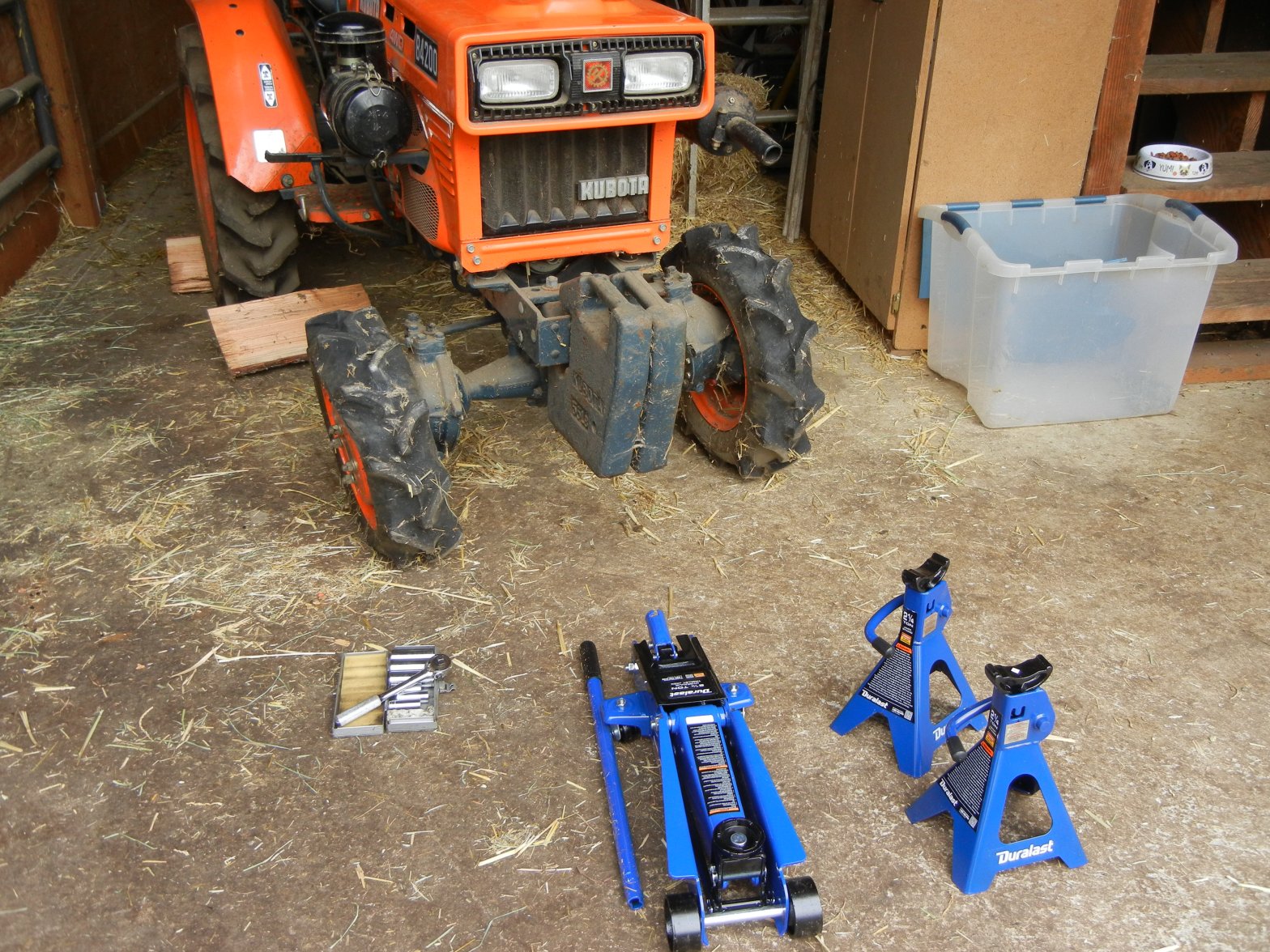
When I was in my early teens my father gave me a socket wrench kit. Forty some years later I still have it and I still use it. My latest challenge was learning how to take off a cracked tractor wheel. Out came the socket wrench for loosening the lug nuts.
When all the gifts of clothes and other “girl” stuff are long gone, the tools are there and appreciated.
Don’t pass up those moments to help your daughter explore the fascinating world of tools and repair. It is the gift of a lifetime.
A Different Type of Following

It is with great joy that I discuss my expanding twitter following. No, this has nothing to do with social media. It is about the wild birds who wait for me every morning to put down the chicken scratch. My chickens get some of the feed, but now the wild birds get their own feed. My purchase of chicken scratch has doubled over the last year and I couldn’t be more please.
Why You Should Step Outside of Your Comfort Zone

People stay in a lot of situations because they are familiar. I think I finally understand why people would choose familiar over happiness, pursuit of a challenge, or choosing a new challenge. We tend to think that our comfort zone = security. But that isn’t an accurate view of life.
Here is what I have come to discover.
When you step outside your comfort zone, you may not know the new territory very well, and that makes you more likely to make mistakes, possibly many more mistakes than usual. Mistakes open you up to criticism from others. Everyone appears to have an opinion about your mistakes and what you should be doing.
As I slog along the mountainous road of author, I have to wonder if I haven’t just gone crazy; that would account for why I would open myself up to the challenges I face and criticisms of so many. Perhaps many of us at times wonder if we haven’t gone crazy.
Well, you haven’t gone crazy. If you stepped outside your comfort zone you may be putting a noble or higher purpose into action. That is what life of fulfillment is about; growing, changing, putting the little self aside and focusing on the bigger issues.
If I would have played it safe, I would have missed out on so much. There is the truth. Seek the greater potential.
Job Hunting – Changing the Process from Psychologically Daunting to Tolerable
I don’t know of anyone who gets up in the morning excited about the prospect of job hunting. Usually, the process of looking for a job is associated with more than just change, it is fraught with what is considered rejection. At a time when you might be feeling low, you now face something like an attack on your personal being. When that happens, you find millions of reasons not to job hunt and from there, a negative spiral can take over.
The truth is, to look at the process of job hunting as personal is very erroneous. How could anyone possibly make an accurate determination about you from a piece of paper or spending an hour with you in a job interview? You are so much more, and it takes years to understand it all. Can’t happen in an hour. It just can’t.
The healthy way to look at job hunting, and the approach, which is more accurate, is to see it for what it truly is, a numbers game. Getting a job is more like a lottery game or scratch card game than you might have realized. Your “numbers” need to line up with someone else’s “numbers”. Then an employer considers you a fit. Winning the lottery is all about odds and you increase odds by buying more scratch tickets or lottery number tickets.
How do you address this numbers game when job hunting? Apply for lots of jobs, lots of them. And be creative in your process, tailor your application, resumé, and follow up correspondence to the job. Go the extra distance and send an extra letter or make an extra phone call. It will help your chances of getting your numbers to match up with theirs.
Here are some examples:
Just out of college, I must have sent out 50 cover letters and resumes. Not applying for a specific job, but letting someone know I existed. I got 1, yes ONE, response. I got a job with them. Numbers…I didn’t take the process personally.
Another job I applied for, I could tell they were hesitant to hire because I was in a dress and the environment was not fancy. I sent a follow up letter saying that the dress was in respect of them and the interview process; it didn’t reflect what I would wear to work each day. I tried to get my numbers line up with theirs. I got the job.
I once search LinkedIn for a anyone at Company XYZ, which had a job I wanted. I found someone, who then told me the name and email address of the person who had the job opening. I called them. By expressing interest and going the extra mile, I got my numbers to line up with theirs. I got the job.
I can guarantee – that in example 2 and 3, if I hadn’t gone the extra distance, I wouldn’t have gotten the job. By going the extra mile, I increased the odds in my favor.
So remember. It isn’t personal. It is about numbers and odds
How to Treat the Earth
It has been a difficult day, reading about the fire situation in Australia. I can only summarize my thoughts this way.
We need to stop treating earth as our playground and start treating earth like our only home.
Why The Loss of Hobby Farms is an Issue of National Security
I grew up 11 miles outside of Lebanon, Oregon. As you might imagine, there was a lot of riding on the school buses during grade school and high school. What I saw during those rides was important to our nation; smaller farms with lots of gardens, fruit trees, and animals. Why? Because during some crisis, any crisis, the rural areas surrounding cities can be a source of food for people in need and that might be a significant number of people.
Most of those farms, some 40 years later, are gone. Even the fencing is gone. The homes are still occupied, but for any number of reasons, people just live there and get food at the store. This problem is not unique to our area. I have spoke to others about the rural life and how the farms are gone.
Problem is, the structures are gone too. You can’t build working, productive farms in a day or a month, or a year. They are constant work and take years of development, especially if the soil needs improvement.
This means, in an emergency, you won’t get food from these areas over night. Not happening.
We as a society need to be aware of this and do more to support the hobby farm. It is important to you and your children.
 Era Lewis